-
Coot Feet are the Best Feet
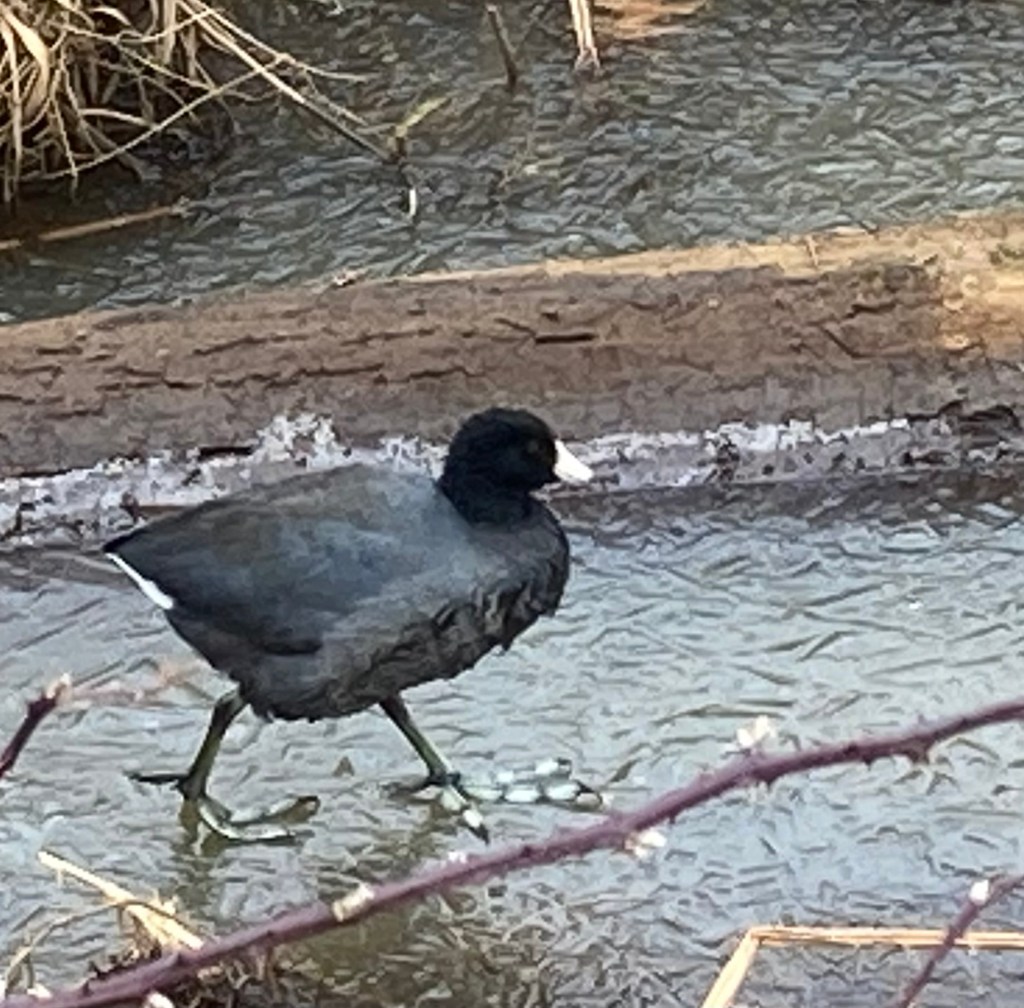
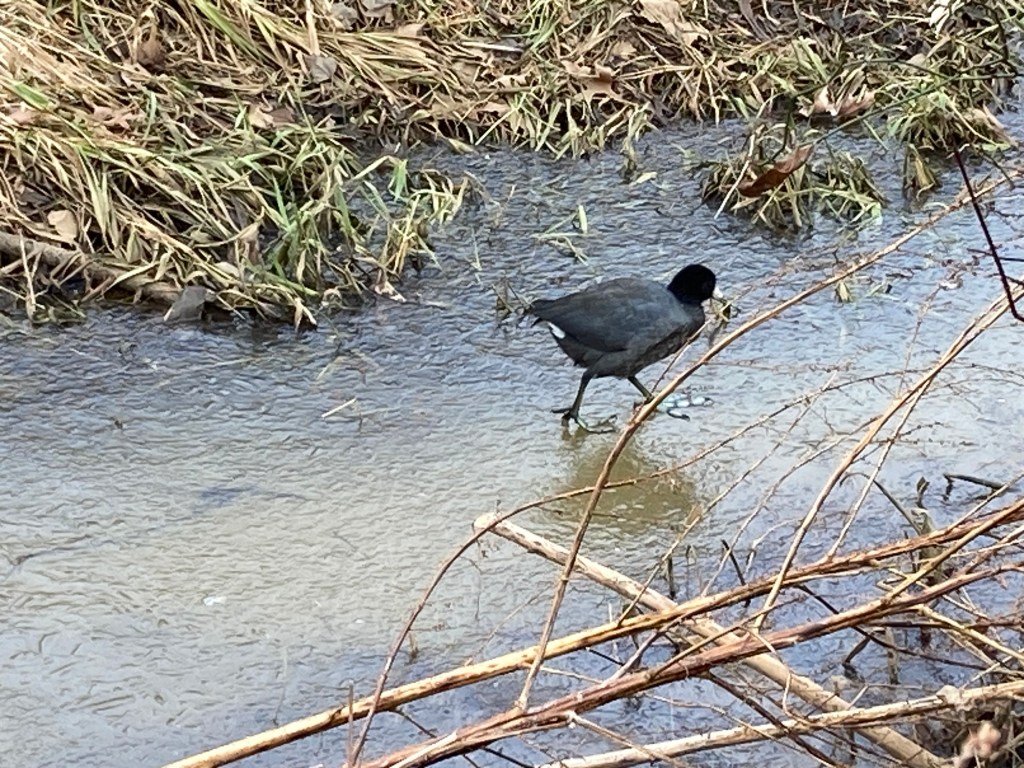
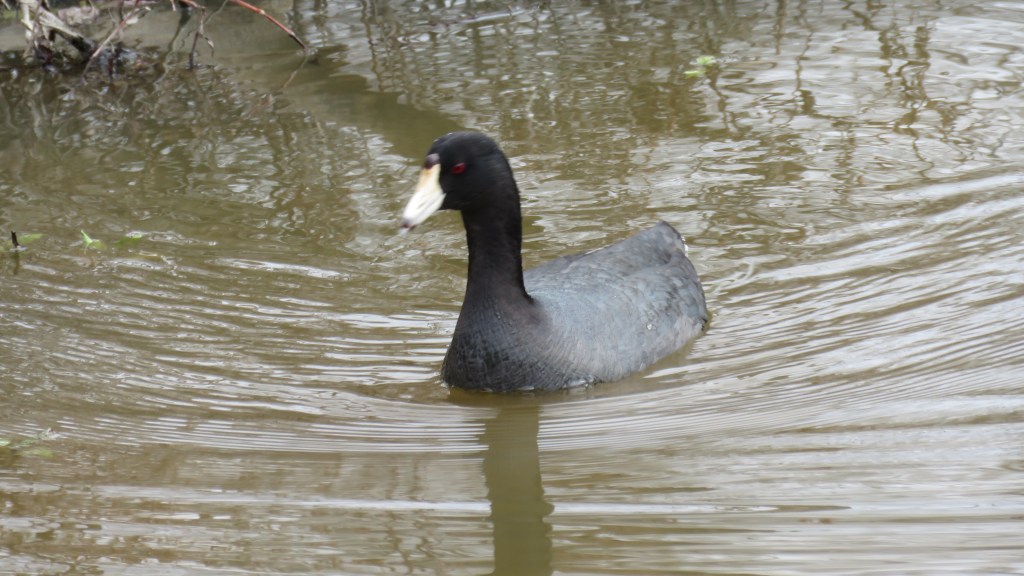
One of my absolute favorite birds showed up at the park this winter: an American Coot (Fulica americana). They seem like a fairly plain bird, until you get a look at their amazing feet!
The first picture in the gallery above is zoomed in on the best shot I could get of the coot walking on some ice one morning. Look at those crazy lobed toes! The cool thing about coots is they swim like ducks, but don’t have webbed feet. Instead, those lobes spread out and have a similar effect to paddle the water.
A lot of birds have specialized feet– the long toes of the Great Blue Heron so it can walk on mud, for example, or the sharp talons of hawks and eagles. But I think coot feet are the weirdest looking and that makes them my favorite. (If you haven’t noticed on here already, I enjoy weird and unusual things in nature!)When the coot is walking around, the wide toes also help it walk on floating vegetation. Of course, there is no floating vegetation in my area this time of year– some of the photos above show the coot walking on ice! But if you saw a coot down in Florida, you might see it balancing lightly on aquatic plants.
We got to watch the coot at Kenilworth for several days. Unfortunately, it didn’t stick around for the Christmas Bird Count on December 20th– on eBird the last checklist including the coot was on December 14. That’s still count week, though, so it might get an asterisk for this year’s count.We usually take at least two walks around the park per day, once in the morning as we open up, and once in the afternoon/evening before we lock up. Most of us are either dedicated birders or are learning to be– so we were all thrilled watching the coot as long as it stuck around. It’s not often seen at our park, and especially not in the wintertime. It easily made my list of the top 10 birds of the year for Kenilworth. You can see that list here.
What are some of your best birding experiences? Do you have a favorite species? Let me know (or even boast, if you’ve seen a rarity) in the comments!
-
Feral Winter Lace
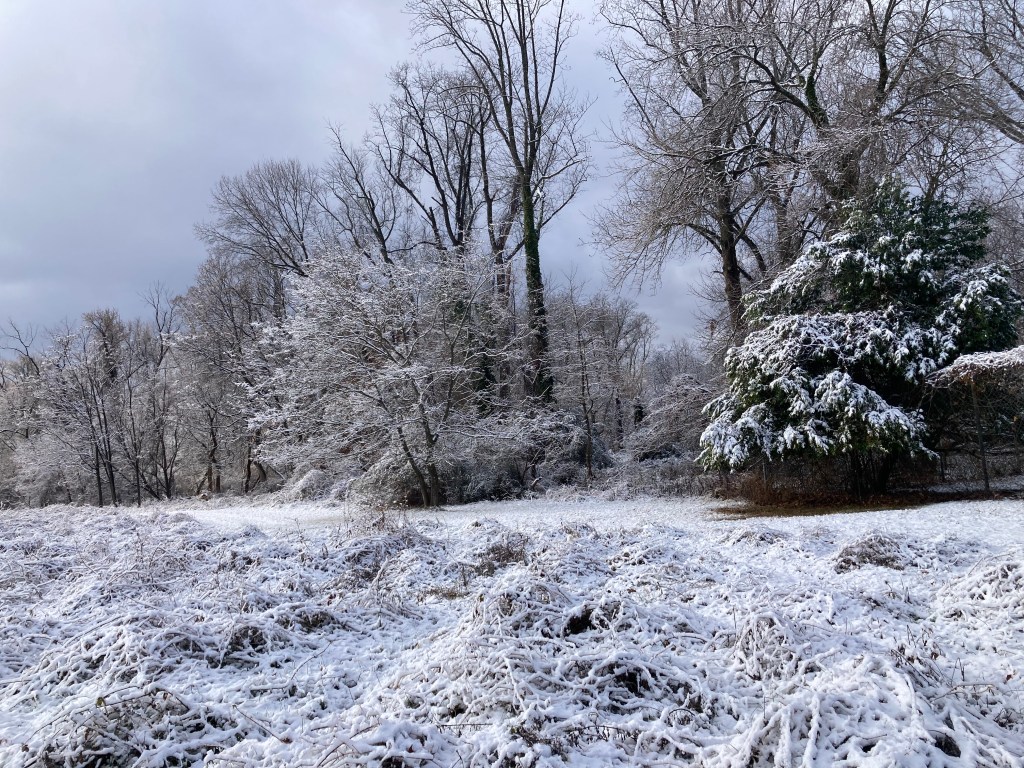
This was the scene I arrived to at work several weeks ago. Snow overnight had glazed the unkempt meadow just outside our gates. My footsteps crunched and my breath fogged in the cold air as we got the park set up for the day. I paused briefly to snap this photo before continuing on my way to check the rest of our trails.
This meadow is so interesting to me; it’s been let grow wild without much management that I know of. Occasionally we have a volunteer project to remove some of the more invasive plants like wineberry. Generally it’s just left feral.
There are quite a few native plants in there that I would love to watch for their pollinator activity this summer. I remember ironweed and joe-pye weed blooming in the fall. There are also a few non-natives that still attract plenty of insect attention, like thistles and mullein. I know thistles can be problematic due to their aggressive nature, but they attract butterflies like crazy.
I chatted with a natural resources seasonal employee once about potentially mowing the meadow in the fall or early spring, to cut back things like sapling trees and wineberry that block light and resources from the more desireable native meadow plants. But that never came to fruition, I think their employment season ended soon after our conversation.It’s not a priority area of the park anyway– just a personal interest of mine. It could be lovely, maybe another year we’ll have the resources to devote to it. That said, winter drapes a gorgeous veil of lace over the entire landscape– cultivated plants and feral weeds alike.
Where in nature have you found untamed beauty? I’d love to hear about them in the comments.
-
Snow Rangers
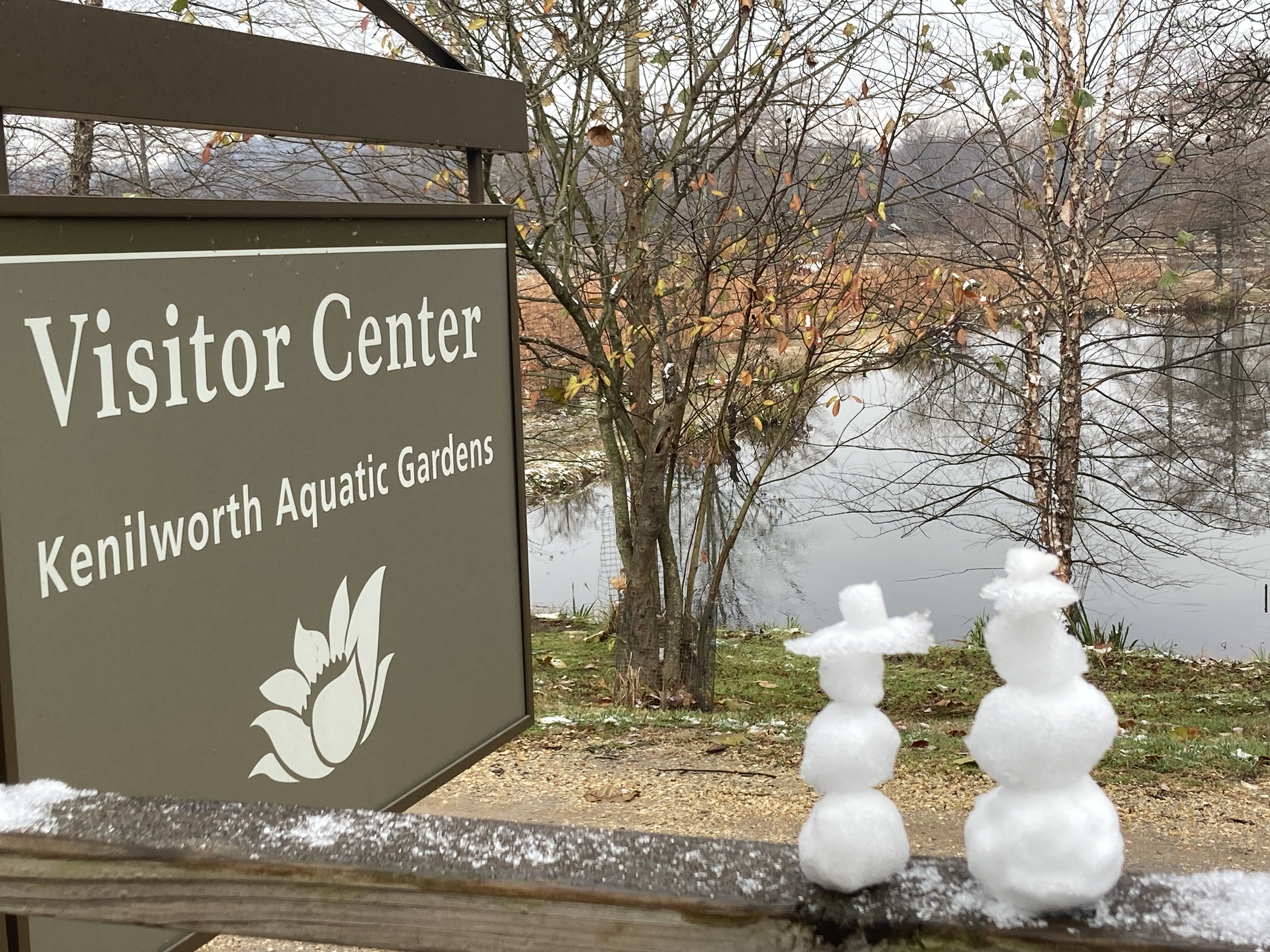
Like I mentioned in my last post, we tend to get a little silly sometimes at work. Especially when several of us are there early in the morning, without a visitor in sight.
Earlier this winter, I think it was after our first snow of the season, a bunch of my coworkers and I were goofing around. Someone made little snowmen on the railing, and then someone else sculpted little hats for them. That’s how I ended up with this shot, a pair of tiny snow rangers watching over their park! I think it’s one of the cutest winter photos I’ve taken.
-
Snow Silliness
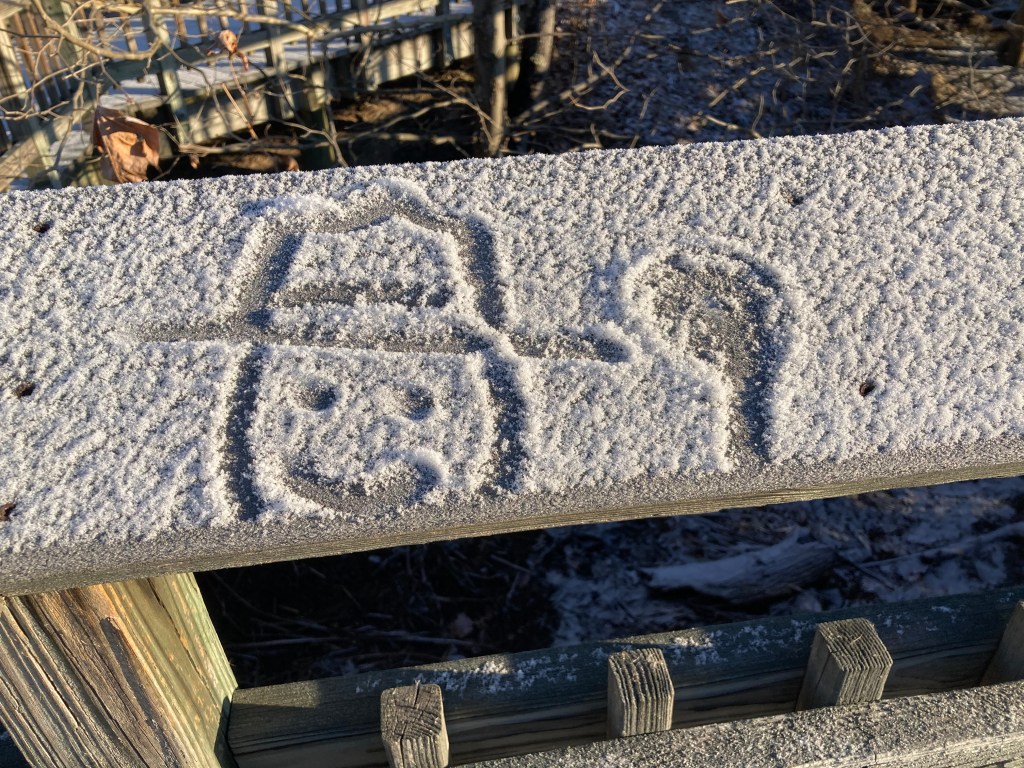
At my park, one of the things we do to open up each morning is to take a walk around the park and the boardwalk as a group. It’s a nice way to start our day, checking in with each other and looking for cool wildlife.
Several weeks ago we got a light dusting of snow overnight (not the snowcrete that’s closed down the DC area for about two weeks now). So I drew picture of a flat hat on a railing at one of the overlooks. Then one coworker added a smiling face below the hat, another added the hat band, and the last in our group drew something like a waving hand. Which is how we ended up with the above snow ranger greeting visitors! I hope we gave people a few smiles.
I really enjoy temporary graffiti like this, both making it and seeing what other people draw or shape in the snow. What’s your favorite way to enjoy the snow? I’d love to hear about it in the comments.
-
When Polka-dots Go Bad
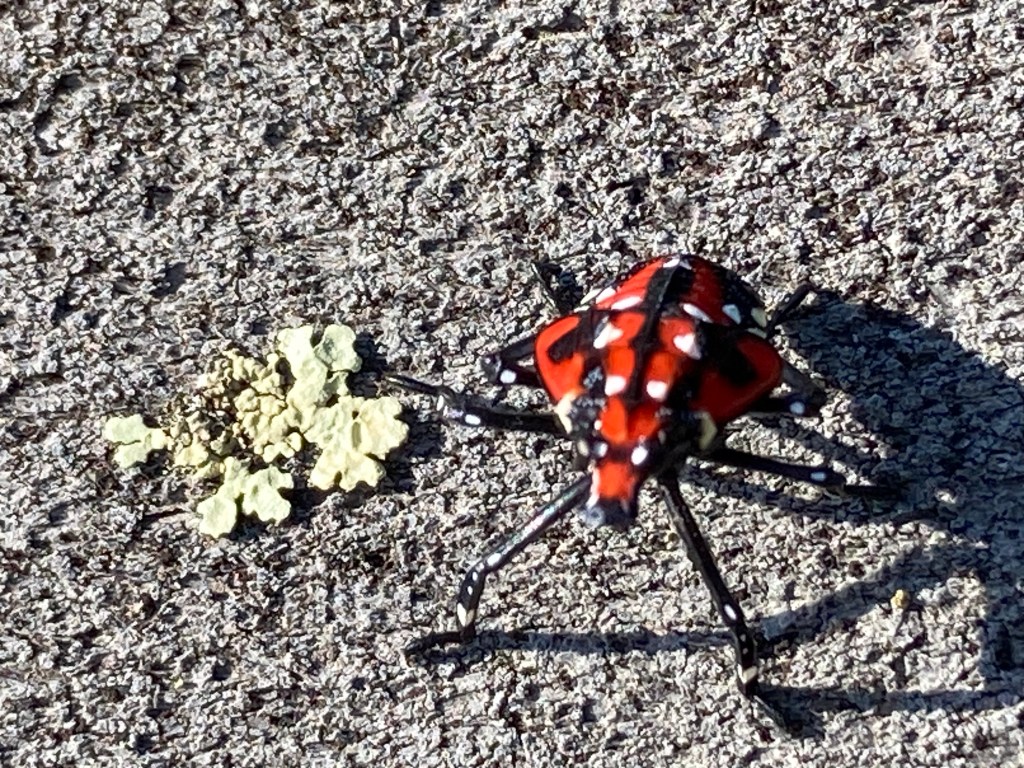
Raaaaar! Gonna take over the world. My friends and family know I love bugs. It makes me really happy to be known as the person you can send random bug pics to, whether for ID help or just to share something cool. Unfortunately, this summer I’ve had several instances where my reply has been negative. It hurts a little to do that, and I don’t want to dissuade anyone from showing me the neat bugs they find. But we are absolutely besieged with Spotted Lanternfly nymphs right now, a nasty invasive.
The problem is the nymphs are polka-dotted. Ok, that’s not what makes them invasive. It’s my personal problem. Because I also love polkadots. So not only do I hate having to squish bugs (or recommend others do so), I hate not being able to feel giddy at something irrationally polkadotted in nature! I don’t know why polkadots amuse me so, it just feels like a fun pattern. How dare this invasive bug take over my beloved polkadots?
The nymphs are very thick at my park– on our opening and closing walks every day, staff has made an informal game to see who can squish the most of them. We’ve found the nymphs are great leapers as well, and more often than not escape our smacks or slammed waterbottles. As the nymphs grow larger they get better and stronger at jumping. So while the first few instars were relatively easy to squish, fourth instars (the red ones) are extremely difficult.
One of my coworkers developed the trick of grabbing one in her hand, throwing it quickly to the ground and stomping on it while it was (hopefully) off-guard. This doesn’t always work, but it’s entertaining. My favorite technique is to grab a nymph and then throw it into a nearby spiderweb. There aren’t always enough spiderwebs within range, though. I’m half-tempted to try to capture an intact web (with spider) in a forked stick that I could then carry around.
But really, there are so many that even with all of us squishing as many as we can see, we’re not likely to make a significant dent in their population. And that’s frustrating. I’ll probably keep getting texts from friends wanting to share their cool bug find, and too often I’ll have to disappoint them. I agree, they do look cool! But knowing that they’re an invasive problem is just a twist in my gut, souring what should be a wonderful feeling that my friend has shared a bug with me.
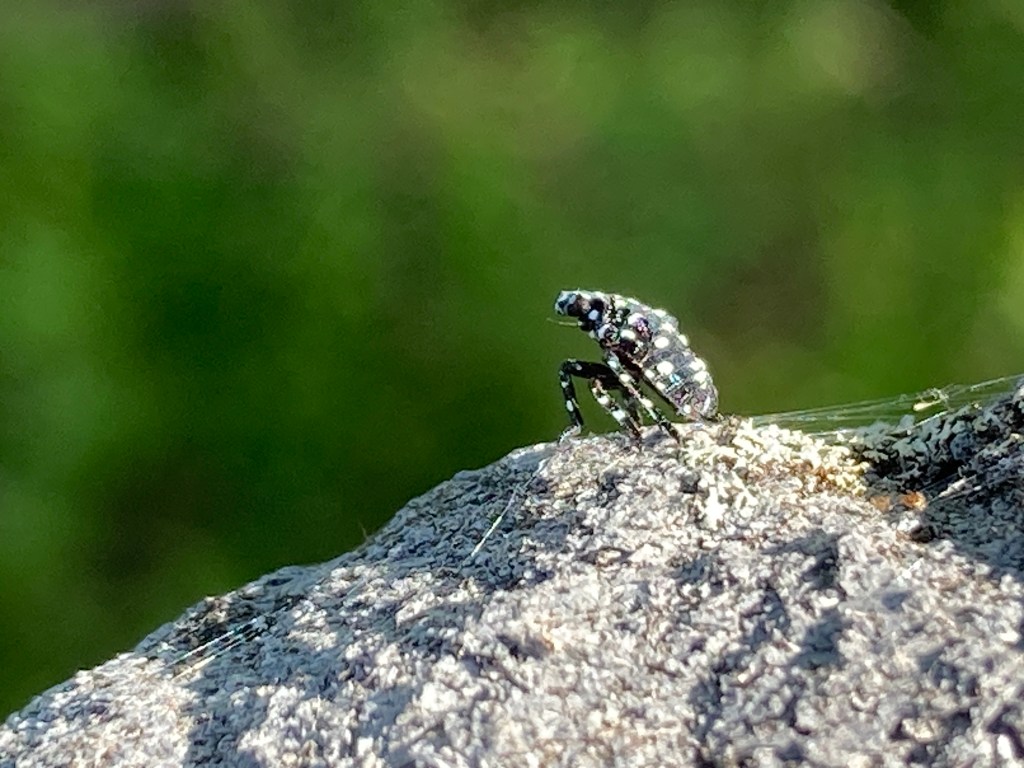
Early instar Spotted Lanternfly nymph contemplating its existence

About Me
The sky is not completely dark at night. Were the sky absolutely dark, one would not be able to see the silhouette of an object against the sky.
Follow Me On
Subscribe To My Newsletter
Subscribe for new travel stories and exclusive content.
 The Contented Naturalist