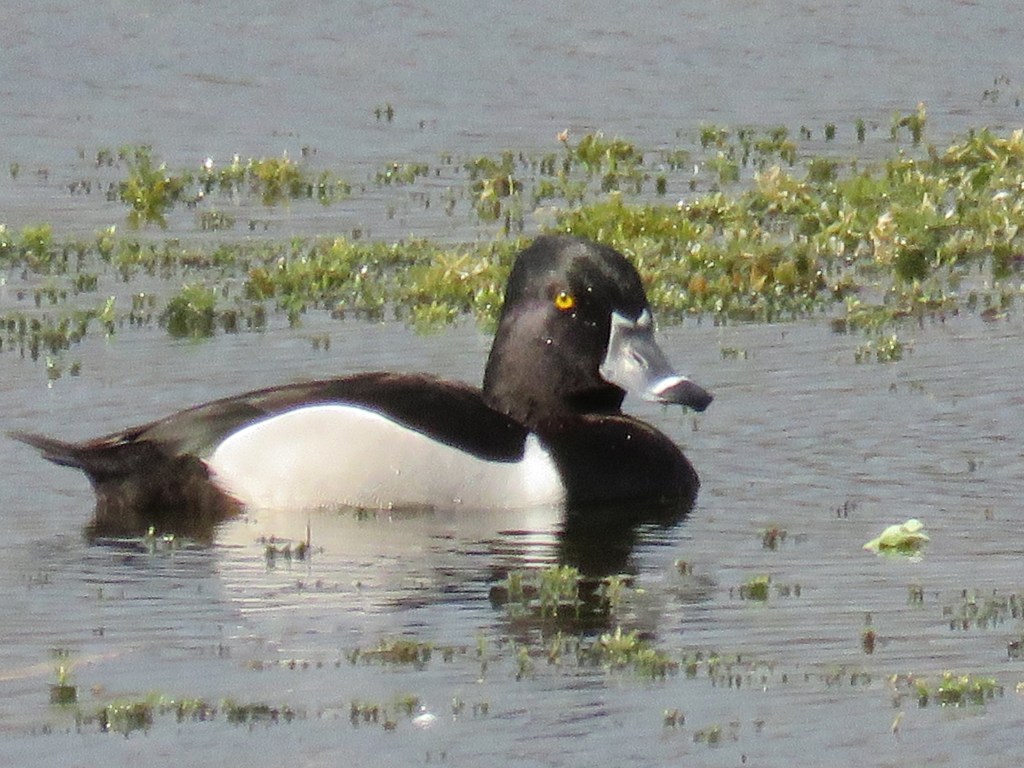
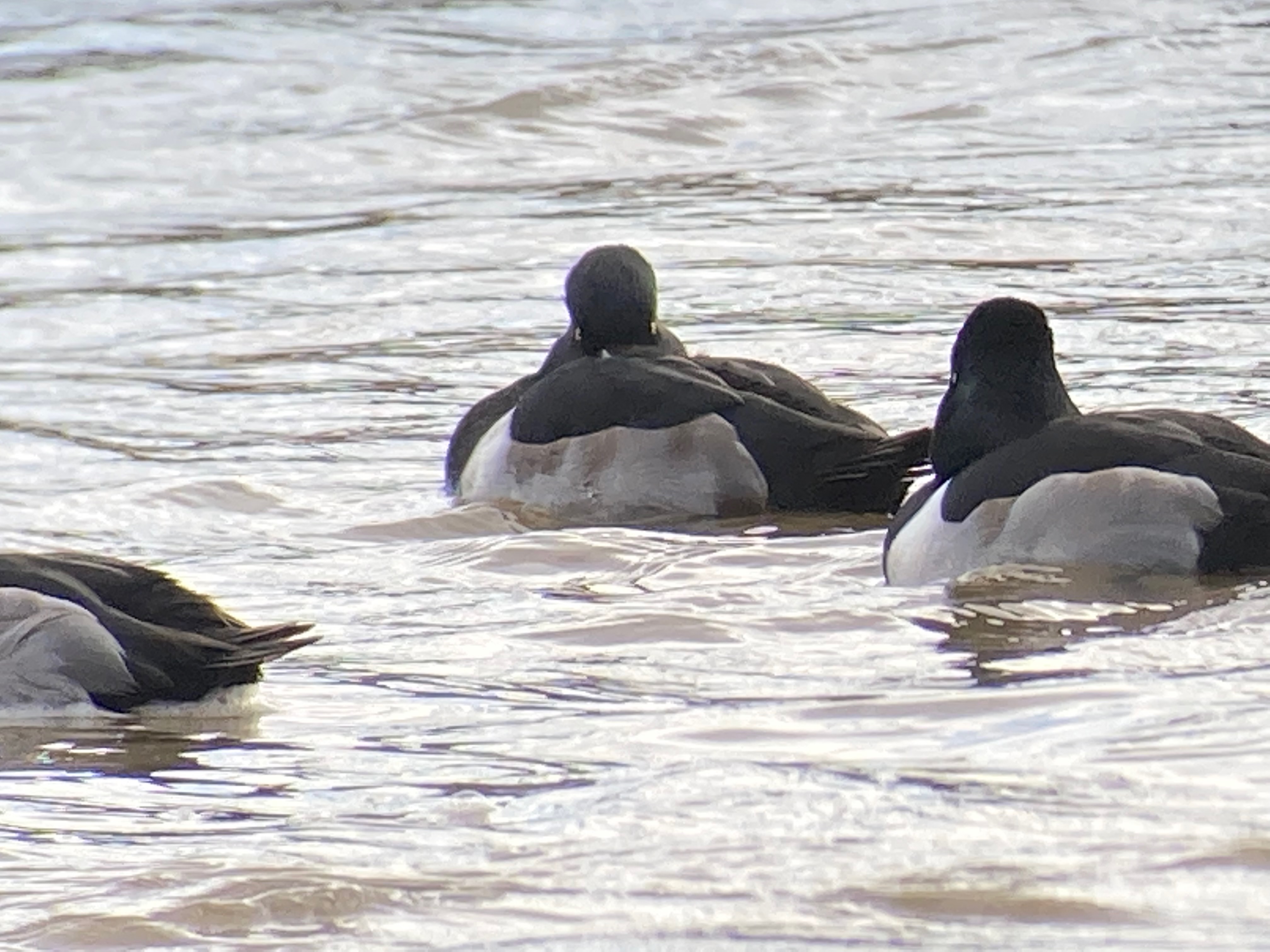
I love the wintertime. Not just because I enjoy cozying up in cold weather, although that’s pretty nice– and Luna gets extra cuddly too when it’s cold out. But my main reason for loving winter is that’s when lots of duck species show up in my area. Huge flocks (or rafts) sometimes show up in parks nearby, but really even just a few will give me glee. They’re weird and lovely and best of all, stay reasonably still most of the time. Very unlike the pesky warblers of spring and summer who hide in the treetops, obscured by leaves so I barely get more than a few seconds’ look.
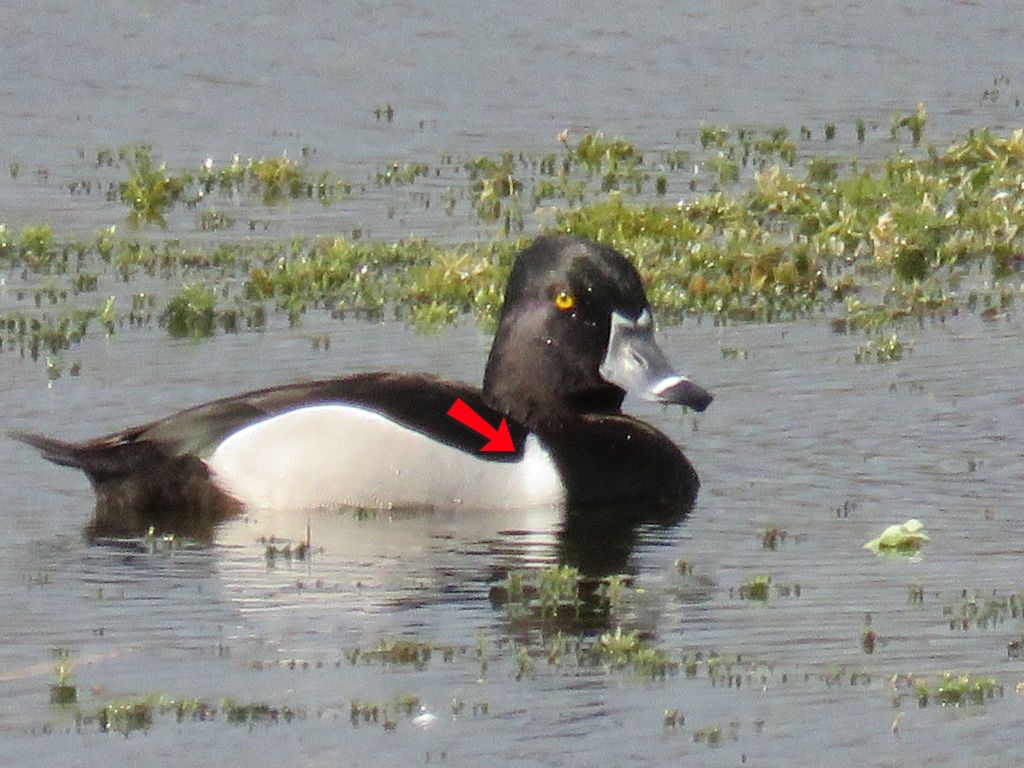
instead, ducks will sit right out on the water, patiently letting me get nice long looks. I use a set of fold-out guides from Cornell Lab of Ornithology, for ID help. It’s a three-part series called “Where’s the White”— basically that on male ducks, you can identify the species just by paying attention to the white spots. (Females are not as simple, unfortunately.)
Now, most of the time I just see dabbling and diving duck species near my house– like Bufflehead, Mergansers, Gadwall, and so forth. But I recently visited Maine for Thanksgiving, and my family rented a house right on the coast so we could all stay together. I managed to get out for a couple walks along the beach, and was overjoyed to see some nice chunky sea ducks. The goofier a bird is the more I like it, and sea ducks are some of the goofiest looking birds.
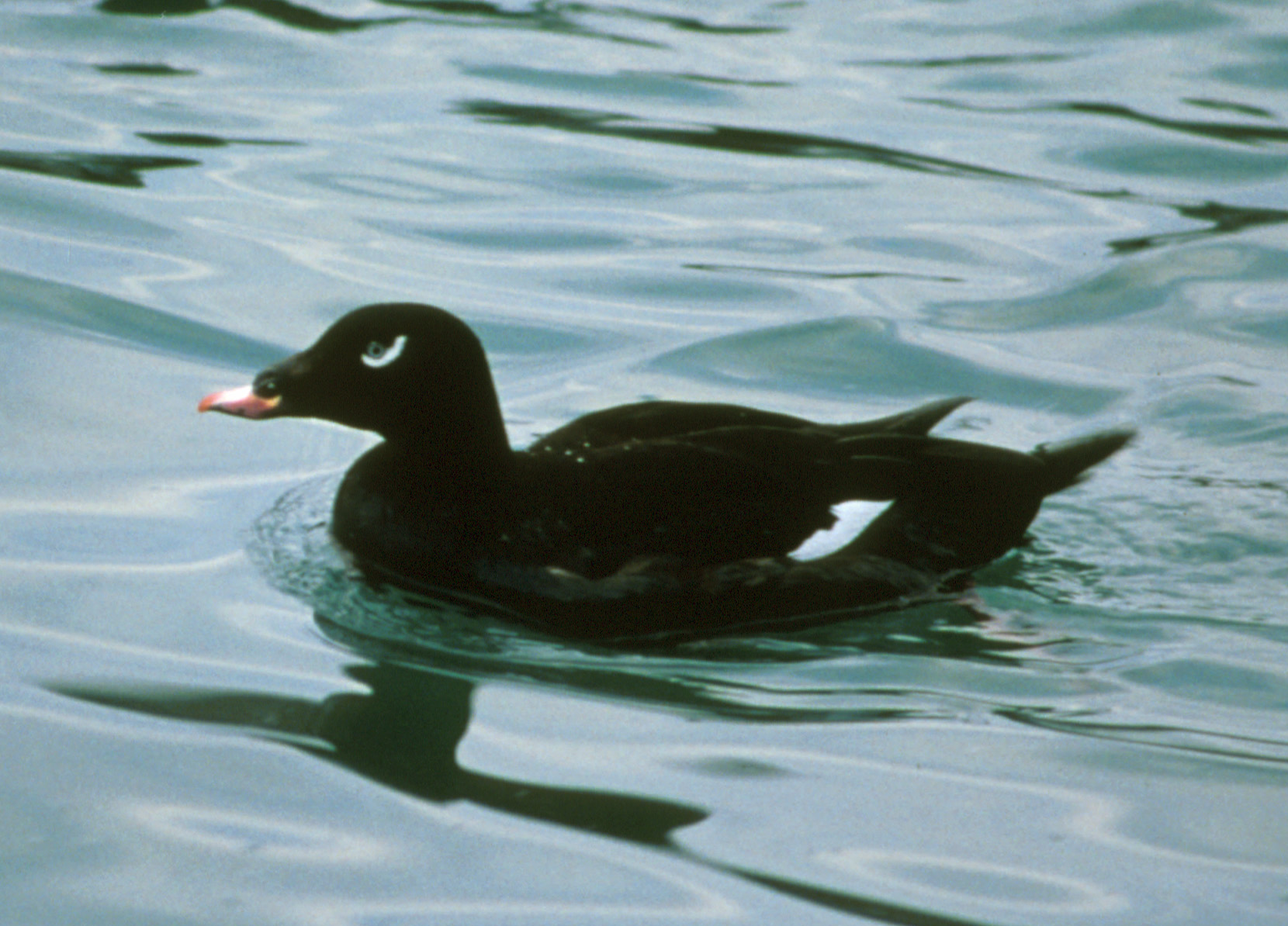
Scoters in particular are really silly looking. Male Surf Scoters have this great big bill, pied orange and white. They also have white spots on their black head, giving them the nickname of “skunkhead.” Male Black Scoters have a big yellow bulge at the base of their beak as well. White-winged Scoters, the kind I saw at Thanksgiving, have a Nike swoosh-shaped white mark under their eye that I think makes them look very goth, like dramatically winged eyeliner.
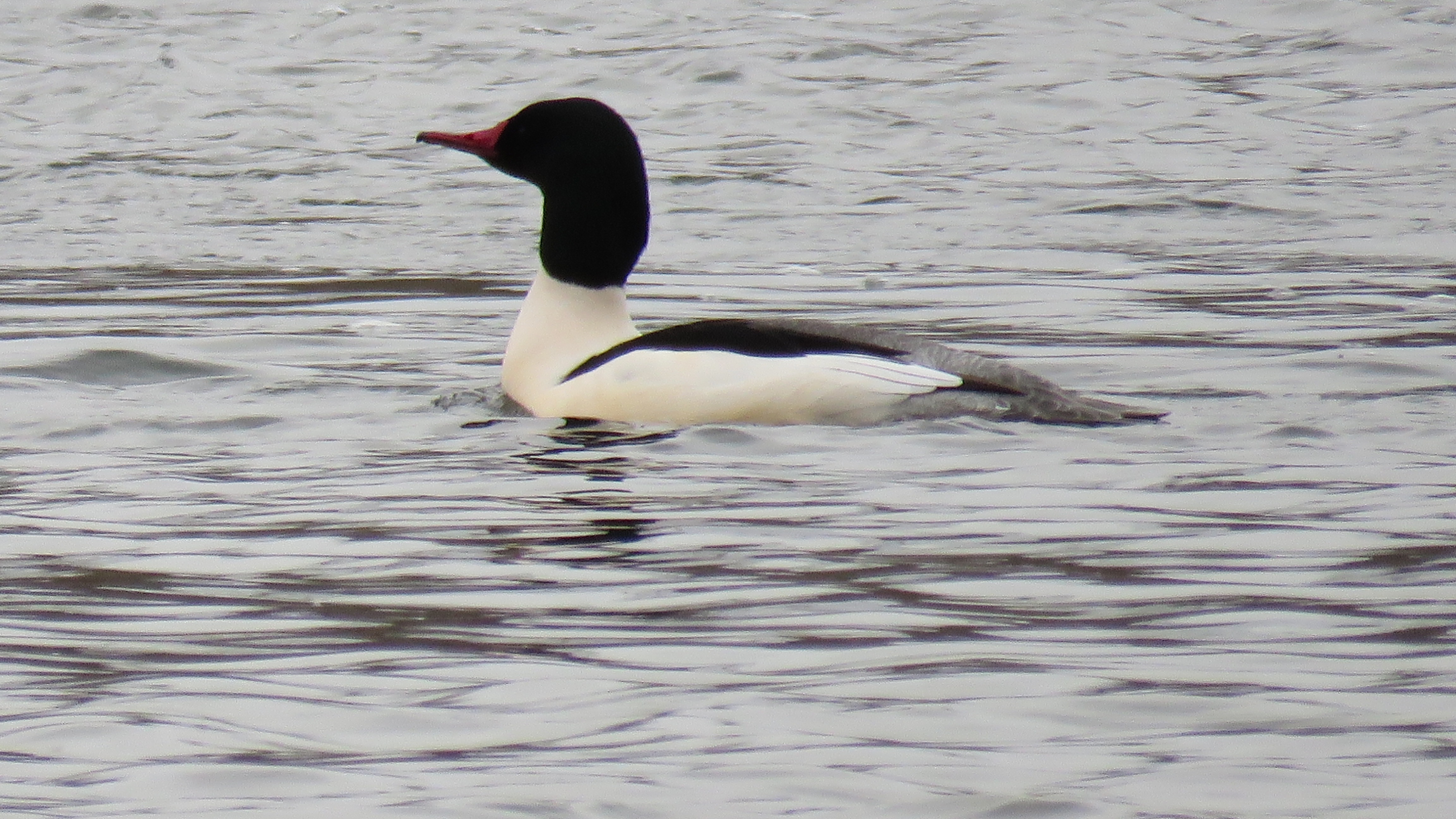
I also saw Common Mergansers, like the one below– I can see them at home this time of year as well. But I don’t get to see Common Eiders at home, and they were in abundance among the offshore waves in Maine. Eiders are really neat birds, they have very well-adapted down feathers that keep them warm. That’s what lets them live far north in the northern Atlantic and the Arctic oceans– the insulating feathers keep them warm, and eider hens also pluck down from their own breast to build warm nests to incubate their eggs. In fact, people still harvest that down for use in (very expensive) comforters and jackets today. Supposedly eiderdown is the warmest in the world. Eider chicks are precocious and leave the nest just a couple hours after hatching, so humans can easily gather the down without hurting any birds. But of course that’s a very time-consuming endeavor, to gather enough down for a whole jacket or comforter. Most of our down products these days use feathers that are a byproduct of the duck and chicken farms that give us meat and eggs.
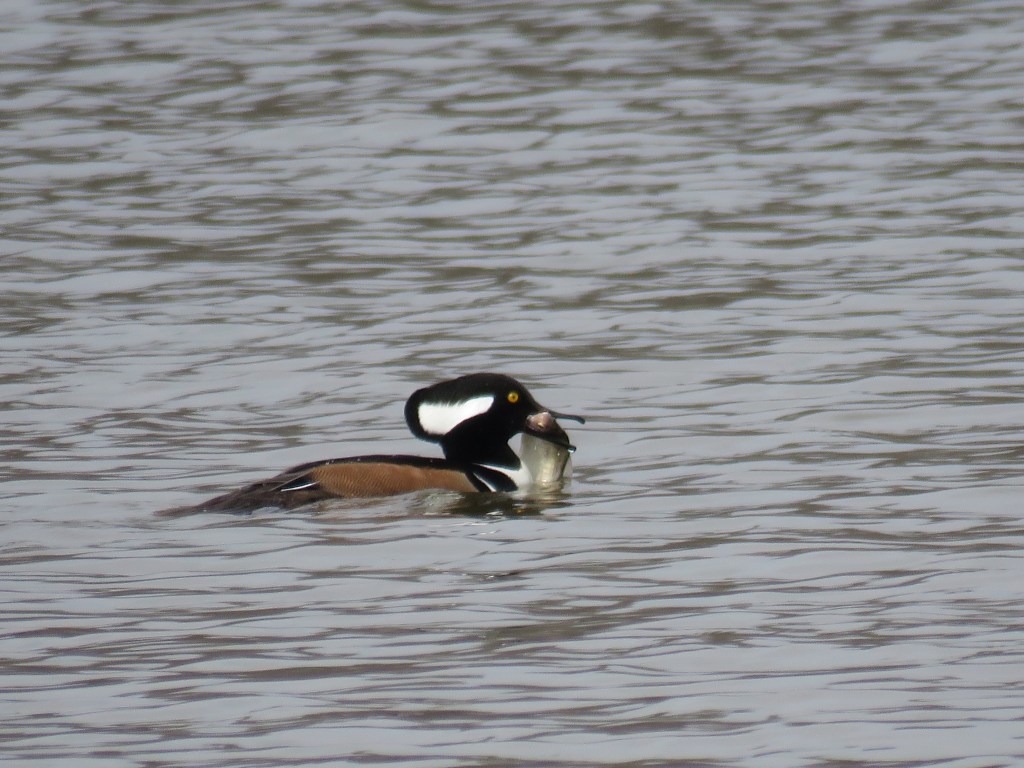
But winter ducks don’t just look silly, they act it too. My absolute favorite duck species is the Hooded Merganser. These I can see in my area, in fact there are a couple spots they even breed locally although their winter population is much larger when migrants arrive. So I’ve had a lot of opportunity to observe these birds, starting from the very first park I worked at (Mason Neck State Park). During the winter, ducks often engage in courtship rituals. And Hooded Mergansers are quite flashy. Males will swim around with their crests raised, pumping their heads back and forth to try to impress females. Usually, though, the females seem completely unimpressed (at least so much as I can interpret cross-species). That kind of cracks me up, the clowning and strutting around.
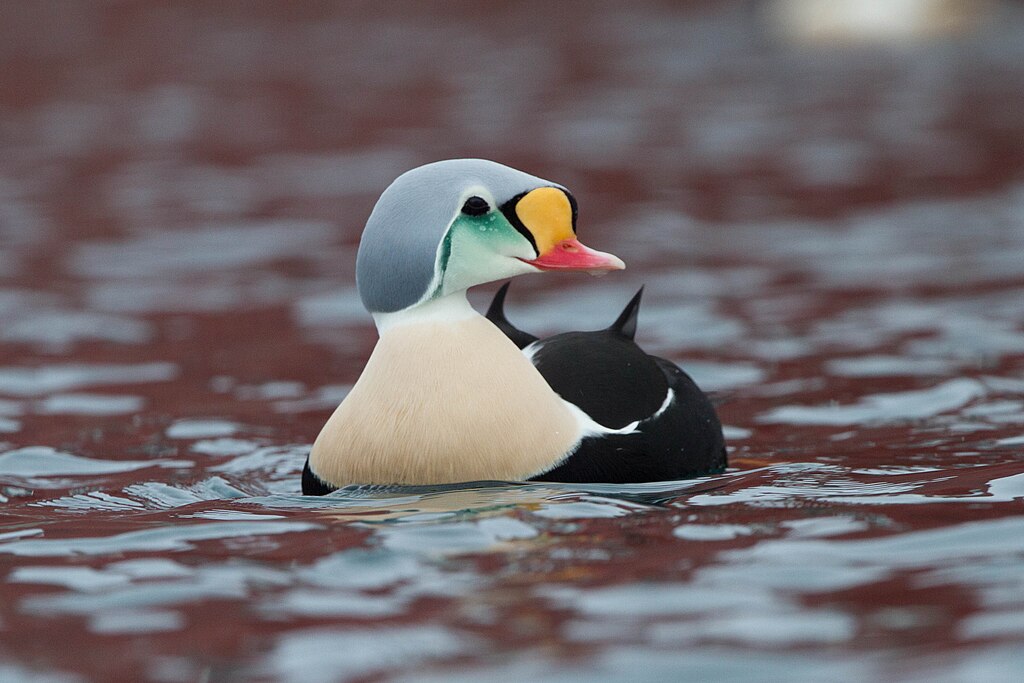
But there’s another kind of duck I haven’t yet seen, either near my house or when visiting Maine. It’s one of the weirdest-looking ducks of all– the King Eider. Male King Eiders have a red beak, a giant orange patch over their beak, a green cheek and a gray forehead, above a more ordinary black and white eider body. I’ve always wanted to see one, but they are not common even along the northeast coast of the US in wintertime. Occasionally one gets spotted off Maine, but so far not while I’ve also been in the area.
Someday I hope I’ll get to see a King Eider in the wild. Maybe someday I’ll even move closer to the ocean, where I can watch silly sea ducks to my heart’s content this time of year. Until then, I’ll make do with the slightly less silly dabblers and divers, and resign myself to a sad case of duck envy. Honk!
 The Contented Naturalist
Leave a comment